This article is a general, nonpartisan explainer. It describes the United States unless stated otherwise, and details change over time, so check official sources for the latest.
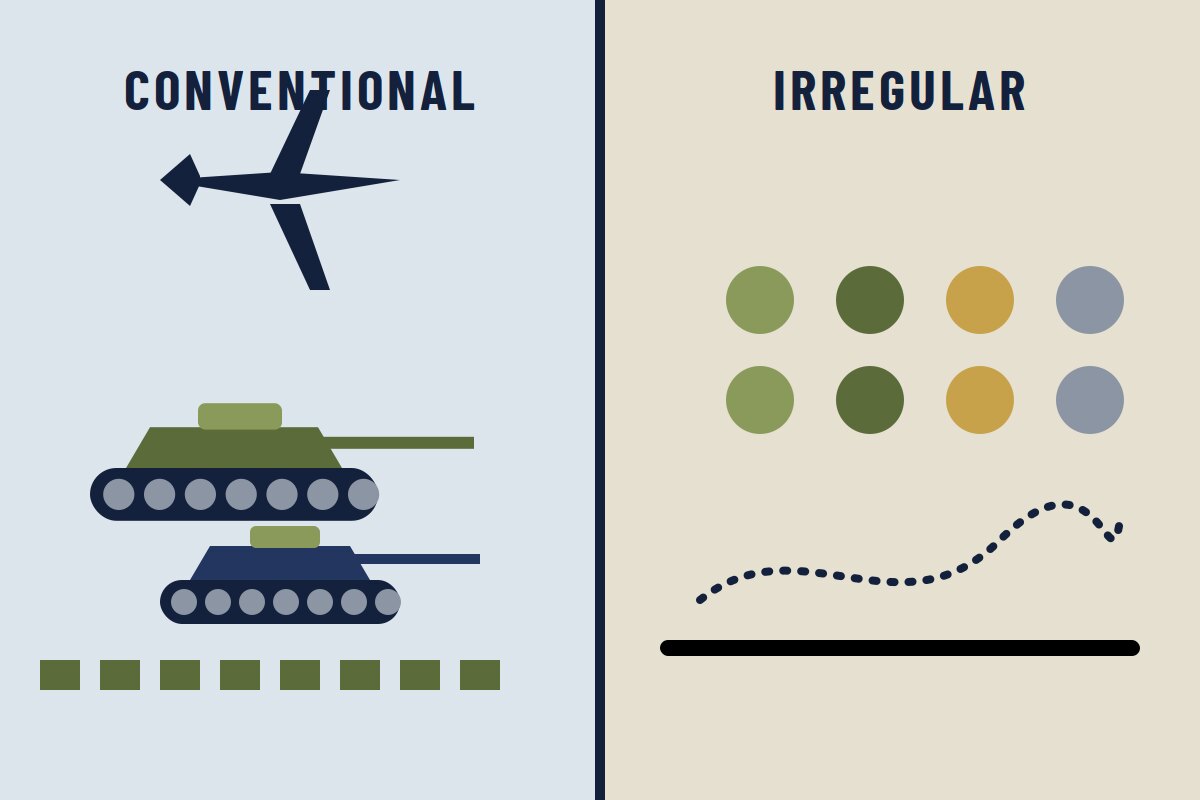
Defense analysts often distinguish between conventional and irregular warfare. The difference is not about how fierce the fighting is. It is about who fights, how, and for what.
Conventional warfare
In conventional warfare, organized, uniformed armed forces of states fight each other using regular units, equipment, and tactics. Examples include armored battles, naval engagements, and air campaigns between national militaries.
Irregular warfare
U.S. doctrine defines irregular warfare as a struggle among state and non-state actors to influence populations and gain legitimacy. It includes insurgency, counterinsurgency, terrorism, and unconventional warfare, which is support to resistance movements. Fighting may involve small groups, local populations, and non-military tools such as information and economic pressure.
Why the line blurs
- States may use proxies, militias, or covert operations.
- Conventional armies may need to conduct counterinsurgency.
- Hybrid threats combine regular and irregular methods.
- Information and cyber tools can be used by both.
Implications for planning
Forces built for conventional wars may not be well suited to long counterinsurgency campaigns, and the reverse is also true. Planners must decide how much of their budget to put toward each kind of capability and how to prepare for the possibility of both.
Historical lessons
Many studies emphasize that political goals and local legitimacy often matter more than battlefield victories in irregular conflicts, and that such wars can last years or decades.
The terms are helpful shorthand, but real conflicts often mix elements of both.