This article is a general, nonpartisan explainer. It describes the United States unless stated otherwise, and details change over time, so check official sources for the latest.
Acquisition is how the military buys what it needs, from rifles to ships. It is one of the most scrutinized parts of defense, because programs are large, long, and complex.
The stages
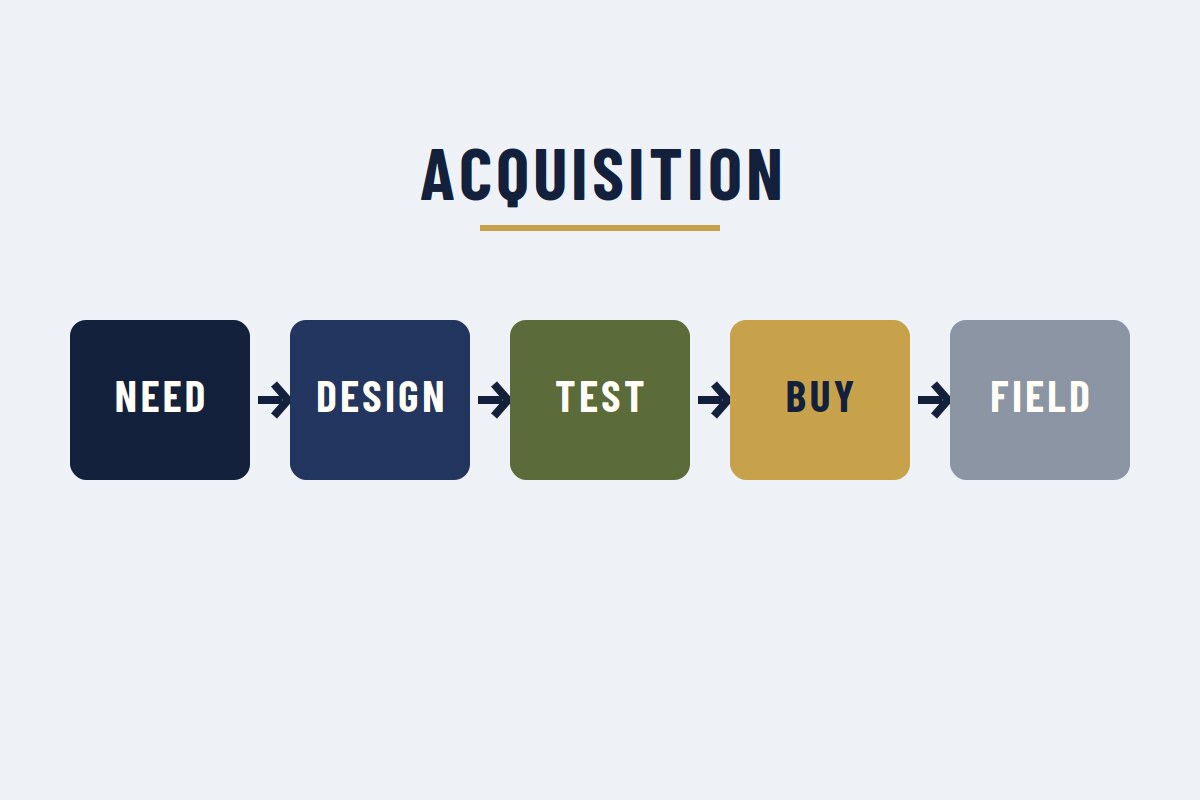
- Identify the need: a gap in capability is recognized.
- Define requirements: the military decides what the system must do.
- Develop and test: designs are built, prototyped, and tested.
- Produce: the system moves into manufacturing.
- Field and sustain: units receive it, and it is maintained over decades.
Milestones and oversight
Major programs pass formal decision points, often called milestones, at which senior officials review cost, schedule, and performance. Congress receives regular reports. Under a law known as Nunn-McCurdy, programs whose costs grow beyond set thresholds must be reported and reviewed.
Common problems
- Requirements that change during development.
- Optimistic cost and schedule estimates.
- Technical risk in new technology.
- A limited number of suppliers.
Approaches to improvement
Reforms have included more prototyping, modular designs, faster pathways for urgent needs, and tailored acquisition frameworks. Each approach has trade-offs between speed, cost, and risk.
Understanding acquisition helps explain why defense programs make news, for good and for bad.