This article is a general, nonpartisan explainer. It describes the United States unless stated otherwise, and details change over time, so check official sources for the latest.
There is an old saying that amateurs talk strategy and professionals talk logistics. Logistics refers to moving, supplying, and maintaining forces. It ties together industry, transport, and operations.
The tooth-to-tail ratio
Military planners speak of a tooth-to-tail ratio: how many personnel are in combat roles (the tooth) versus supporting roles (the tail). Modern forces need a large tail because equipment is complex and consumes vast supplies.
What logistics covers
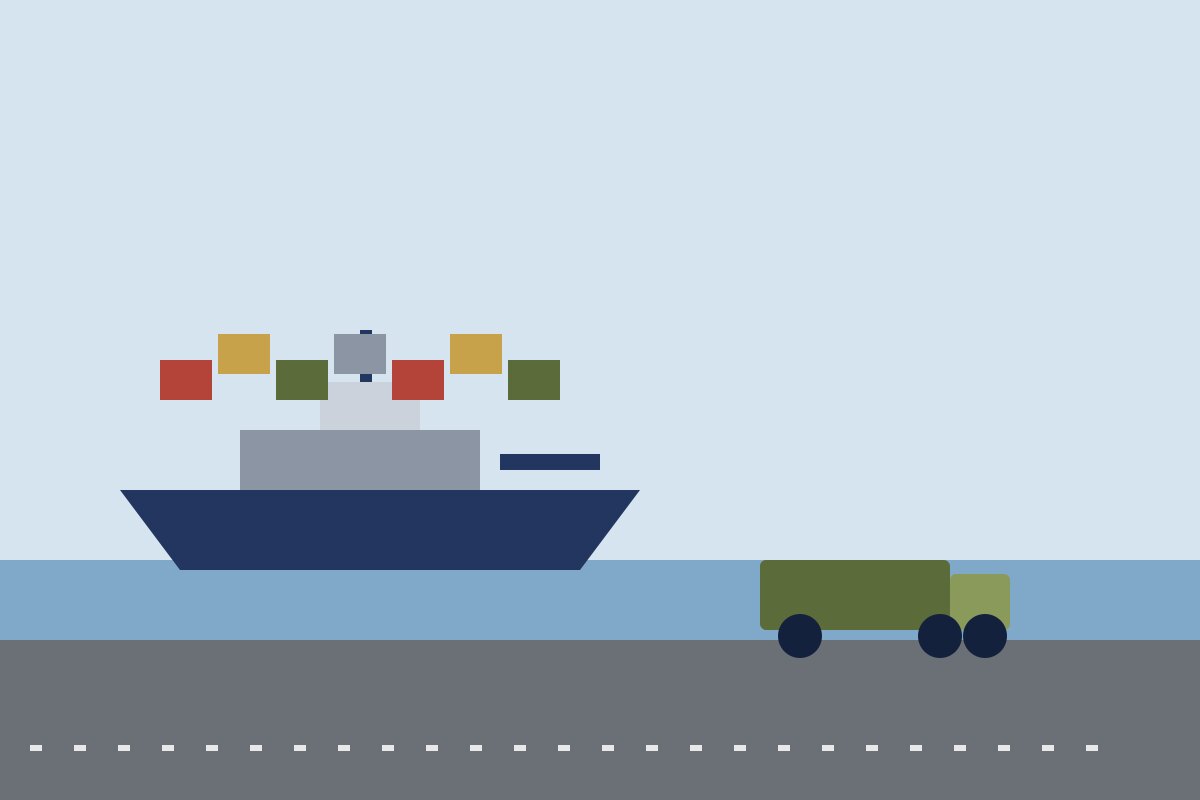
- Transportation by sea, air, rail, and road.
- Supply of fuel, food, water, and ammunition.
- Maintenance and repair of equipment.
- Medical support and evacuation.
- Construction and base operations.
Strategic, operational, and tactical levels
At the strategic level, logistics links national industry and ports with theater distribution. At the operational level, it includes hubs and routes within a theater. At the tactical level, it includes the last stretch to the units that use the supplies.
Prepositioning and lift
Militaries use prepositioned stocks, forward bases, and airlift and sealift fleets to move forces quickly. Each has costs and limits. Ports and airfields can be vulnerable, and strategic lift is finite.
Contested logistics
Analysts increasingly discuss contested logistics, where adversaries can target supply lines with long-range weapons or cyberattacks. This affects choices on basing, stockpiles, and transport.
Logistics rarely makes headlines, but it shapes what militaries can and cannot do.